

There is no “away.” When we toss something out, it doesn’t disappear — it just goes somewhere we don’t have to look at it. There’s a better option hiding in plain sight.
Every April, Earth Day rolls around and we’re flooded with the same advice: swap your plastic straws, carry a tote bag, remember to recycle. And those things matter — they do. But there’s a much bigger conversation happening right now about sustainability, and it starts with the stuff already sitting in your home.
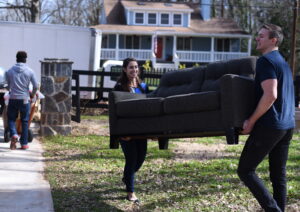
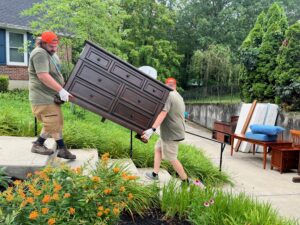
That old couch you’ve been meaning to replace. The dresser from your college apartment. The kitchen table you upgraded from two years ago. Right now, most people see two options when it’s time to part with large household items: keep it, or throw it away. But there’s a third option that’s better for the planet, better for your community, and — honestly — better for you, too.
Donate it. It sounds simple, and it is. But the impact is anything but small.
If you have items you’re looking to donate to charity, but they’re too big to bring in yourself or you simply don’t have the time to donate them, ReSupply can help! We offer convenient donation pickup, with pick-ups available within 24 hours. Click the button below to schedule your donation pickup today.
The Landfill Problem No One Talks About
Here’s something that might surprise you: furniture has a recycling rate of just 0.3% [1]. That’s not a typo. According to the EPA, more than 80% of discarded furniture ends up in a landfill [2]. In 2018 alone, Americans generated 12.1 million tons of furniture and furnishing waste [2]— and that number has only grown since.
We tend to think about landfill waste in terms of plastic bottles and food scraps, but bulky household items are a massive part of the problem. A single sofa can take up to decades to decompose in a landfill. Mattresses, dressers, dining sets — they pile up in ways most people never see or think about.
Meanwhile, more than 146 million tons of municipal solid waste were landfilled in the United States in a single year [3]. That’s the weight of roughly 1,200 Statues of Liberty — every single year — buried in the ground.
And here’s the thing: a huge portion of what ends up in landfills isn’t actually trash. It’s perfectly usable furniture, clothing, appliances, and household goods that simply need somewhere to go.
The Circular Economy Isn’t a Buzzword — It’s a Movement
You’ve probably heard the term “circular economy” floating around. It can sound like corporate jargon, but the idea behind it is actually pretty intuitive: instead of a make-use-dispose cycle, we keep products and materials in use for as long as possible.
The global circular economy market was valued at roughly $150 billion in 2025 and is projected to approach $355 billion by 2032 [4]. That’s not a niche trend — it’s a fundamental shift in how we think about consumption.
And at the heart of that shift is reuse. Not just recycling, where materials get broken down and rebuilt — but actual reuse, where your gently used couch becomes someone else’s living room centerpiece. Where the kitchen table you’ve outgrown becomes the place another family gathers for dinner.
Donation is one of the most direct, powerful ways to participate in the circular economy. Every item that gets donated instead of dumped is one less thing in a landfill and one more resource flowing into a community that needs it. At ReSupply, we’ve helped divert more than 80 million pounds of goods from landfills and delivered over $90 million in resources to our network of 3,000+ local charity partners nationwide. That’s the circular economy in action — not in theory, but in living rooms, shelters, and community centers across the country.
Gen Z Gets It (and the Rest of Us Are Catching On)
If there’s one generation driving this shift, it’s Gen Z. The numbers are striking: 88% of Gen Z consumers have shopped secondhand [5]. Secondhand apparel alone grew 5x faster than the broader retail clothing sector in 2024 [6], and according to ThredUp’s 2025 Resale Report [7], the global secondhand market is on track to hit $367 billion by 2029 [7].
But it goes deeper than fashion. Seventy-five percent of users on resale platforms report buying used items specifically to cut back on consumption [8]. And Gen Z and Millennials plan to spend nearly half of their apparel budget on secondhand goods going forward [9].
This isn’t a phase. It’s a generational value system built around the idea that things don’t lose their worth just because you’re done with them. And that principle applies just as much to the furniture in your garage as it does to the jacket on a thrift store rack.
The rest of the consumer world is catching on, too. Ninety-three percent of American consumers shop online for secondhand items [10]. The reuse movement isn’t just for twenty-somethings shopping vintage — it’s becoming the norm.
Donating Is Easier Than You Think
One of the biggest barriers to donation isn’t willingness — it’s logistics. You want to donate the old sectional, but how? It doesn’t fit in your car. The charity drop-off is across town. You’re not sure what they’ll even accept.
This is exactly why ReSupply exists. We pick up your gently used furniture, clothing, appliances, and household goods directly from your home — often within 24 to 48 hours — and deliver them to local nonprofits and charities in your area. You don’t have to load anything. You don’t have to drive anywhere. You schedule a pickup, our team handles the rest, and your items go directly to organizations that will put them to good use.
It’s donating without the hassle. And because we work with over 3,000 charity partners across 47 states, the chances are high that your items stay local, benefiting the communities you actually live in.
What Sustainability Can Actually Look Like
Sustainability doesn’t only have to mean buying new eco-friendly products (ironic, right?). Sometimes the most sustainable thing you can do is deal with what you already have — thoughtfully.
This April, instead of letting that old furniture sit in the garage for another year or dragging it to the curb, consider what it could become for someone else. That armchair isn’t waste. It’s a resource. That set of dishes isn’t clutter. It’s a fresh start for a family furnishing their first apartment.
When you choose to donate instead of dispose of, you’re doing more than clearing space in your home. You’re keeping usable goods in circulation, supporting local charities, reducing landfill waste, and participating in a growing economic movement that values keeping things in use over throwing them away.
That’s the kind of sustainability that actually makes a difference — not just on Earth Day, but all year long.
FAQ
What items can I donate through ReSupply? ReSupply accepts a wide range of gently used household items including furniture (couches, tables, dressers, bed frames), clothing, small appliances, kitchenware, home decor, and more. If you’re unsure whether your specific items qualify, you can check when you schedule your pickup.
How does donating help the environment? Every item donated is one fewer item in a landfill. Furniture has a recycling rate of just 0.3%, meaning almost all discarded furniture ends up buried in the ground where it can take decades to decompose. Donating keeps usable goods in circulation, reduces waste, and cuts down on the environmental cost of manufacturing new products.
How quickly can ReSupply pick up my items?In most areas, ReSupply can schedule a pickup within 24 to 48 hours, Monday through Saturday. You choose the time that works best for you, and our team handles the heavy lifting from anywhere in your home.
Where do my donated items go? Your items are delivered to local nonprofits and charity partners in your area. ReSupply works with over 3,000 charity partner locations across 47 states, so your donations stay local and directly support your community.
Does it cost anything to donate through ReSupply? ReSupply charges a fee for the pickup service, starting at $99 in most areas. This covers the cost of pickup and delivery, and it’s what allows ReSupply to offer the service completely free to charities — so 100% of your donated goods go toward supporting their mission.
Is donation really better for the environment than recycling? In many cases, yes. Recycling breaks materials down and rebuilds them, which still requires energy and resources. Donation keeps items in their original usable form, which means fewer raw materials consumed, less energy spent, and less waste generated overall. It’s one of the most direct ways to reduce your environmental footprint.
What if my items aren’t in perfect condition? Items don’t need to be brand new — just gently used and in working condition. If something has significant damage or doesn’t meet donation standards, ReSupply will ensure it’s recycled or ethically disposed of rather than sent to a landfill.
How does ReSupply support the circular economy? ReSupply connects people who no longer need their household items with charities and communities that do. By keeping goods in use and out of landfills, ReSupply helps close the loop on the traditional consume-and-dispose cycle — putting the principles of the circular economy into everyday action.
Citations
[1]* U.S. Environmental Protection Agency. “Durable Goods: Product-Specific Data.” EPA Facts and Figures about Materials, Waste and Recycling. https://www.epa.gov/facts-and-figures-about-materials-waste-and-recycling/durable-goods-product-specific-data
[2] U.S. Environmental Protection Agency. “Durable Goods: Product-Specific Data.” EPA Facts and Figures about Materials, Waste and Recycling. https://www.epa.gov/facts-and-figures-about-materials-waste-and-recycling/durable-goods-product-specific-data
[3] U.S. Environmental Protection Agency. “National Overview: Facts and Figures on Materials, Wastes and Recycling.” https://www.epa.gov/facts-and-figures-about-materials-waste-and-recycling/national-overview-facts-and-figures-materials
[4] Circular Business Review. “Global Circular Economy Market Set to More Than Double by 2032 Amid Strong Corporate and Policy Support.” https://www.circularbusinessreview.com/global-circular-economy-market-set-to-more-than-double-by-2032-amid-strong-corporate-and-policy-support/
[5] Sustainability-driven fashion: Unpacking generation Z’s second-hand clothing purchase intentions. Journal of Retailing and Consumer Services, 2025. https://www.sciencedirect.com/science/article/pii/S0969698925000852
[6]* ThredUp. 2025 Resale Report. https://cf-assets-tup.thredup.com/resale_report/2025/ThredUp_Resale_Report_2025.pdf (Note: The correct figure is 5X faster for secondhand apparel in 2024, not 8X. See Issue 2 above.)
[7] ThredUp. 2025 Resale Report. https://cf-assets-tup.thredup.com/resale_report/2025/ThredUp_Resale_Report_2025.pdf
[8] Escalante, A. “Save the Earth, But Make It Fashion: Gen Z’s Secondhand Shopping, Explained.” Who What Wear, April 27, 2025. https://www.whowhatwear.com/fashion/shopping/gen-z-sustainability-report
[9]* ThredUp. 2025 Resale Report. https://cf-assets-tup.thredup.com/resale_report/2025/ThredUp_Resale_Report_2025.pdf (Note: The 59% figure refers to all consumers regarding tariff impacts, not Gen Z specifically. See Issue 3 above.)[10] Capital One Shopping. “Thrifting Statistics (2026): Industry Size, Revenue & Growth Rate.” https://capitaloneshopping.com/research/thrifting-statistics/